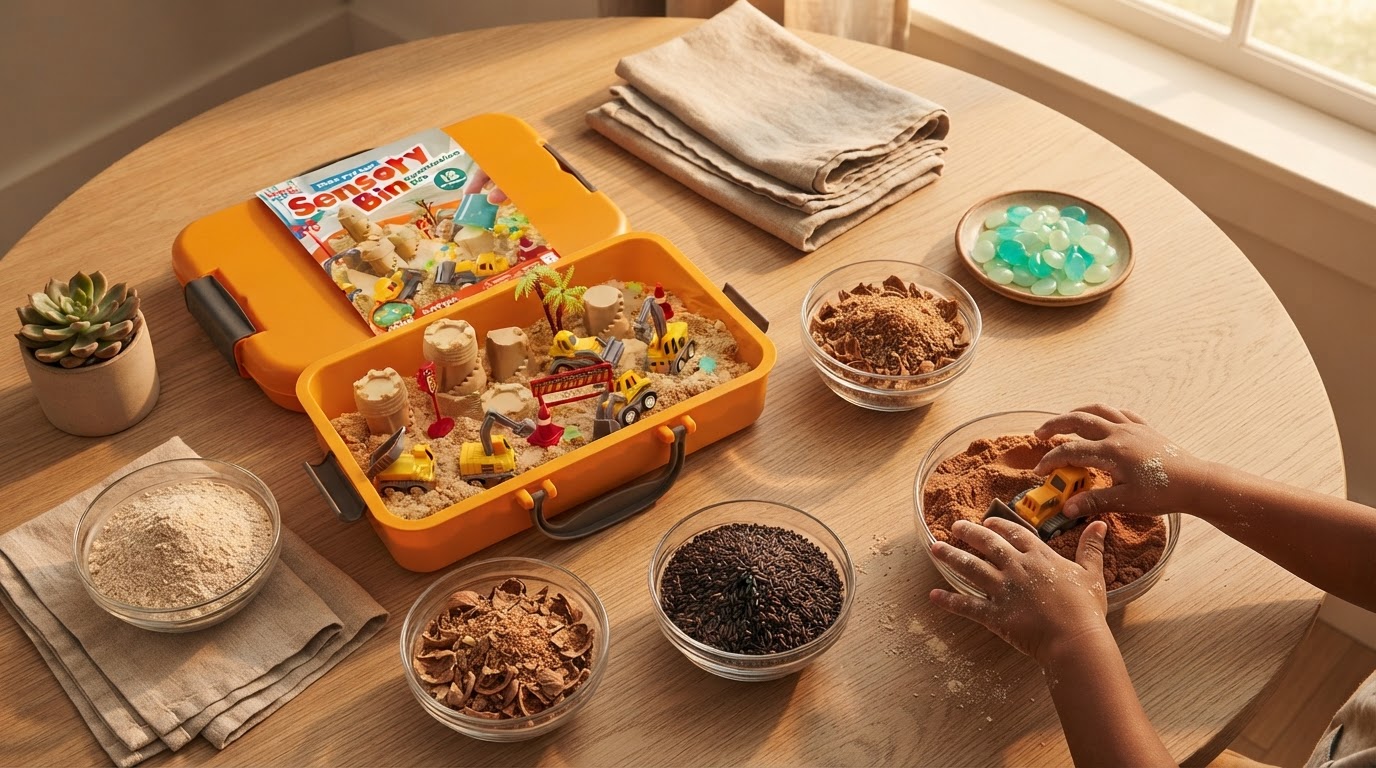
Selecting Construction Sensory Bin Dirt Fillers for Play
 Maya ChenContributing Editor
October 8, 2026. This analysis evaluates the efficacy and safety profiles of various particulate materials used to simulate earth in child-directed play environments. It is intended for caregivers and educators seeking to optimize tactile feedback while maintaining manageable cleanup protocols in a domestic or classroom setting.
The Problem with Traditional Outdoor Soil
The conventional wisdom says that the most authentic way to facilitate a construction-themed play experience is to simply bring the outdoors in. However, this approach ignores the significant biological and chemical risks inherent in untreated soil. Real dirt is rarely just dirt; it is a complex matrix of organic matter, potential pathogens, and environmental contaminants. According to a community discussion hosted by Sensory Play by Sunshine Sensory, many parents are now pivoting toward "taste-safe" alternatives to mitigate the risk of accidental ingestion, especially when building roads or creating mini construction sites with younger children. The shift away from raw garden soil is not merely about avoiding mud stains; it is a response to the lack of quality control in natural substrates. When children engage with truck sensory bin filler ideas, the friction and weight of the material determine the longevity of the engagement. Standard dirt often fails here, either being too dry to hold a shape or too wet, leading to bacterial growth if stored in a sealed container. Furthermore, the cleanup requirements for natural mud are disproportionate to the developmental benefits gained. A study of domestic play environments suggests that high-friction, high-mess activities are frequently discontinued by parents due to the labor involved in sanitation. This leads to a paradoxical situation where the "most natural" material actually results in less total play time over the long term. We must look at engineered or processed alternatives that provide the necessary tactile resistance for toy excavators without the biological hazards of the backyard.
Optimizing the Construction Sensory Bin Experience
Construction Sensory Bin addresses the limitations of raw substrates by prioritizing materials that balance physical realism with safety and containment. A primary concern in these setups is how well the filler interacts with mechanical toy parts. While some suggest using kinetic sand construction set bin configurations, there is a specific need for a "dirt" texture that provides higher shear strength for digging operations. As noted by Sensory n Stuff, effective construction play setups are designed to encourage fine motor skills and focus through predictable material behavior. The Construction Sensory Bin methodology relies on fillers that do not clog the axles of small-scale machinery, a common failure point in cheaper, DIY dyed-rice alternatives. Here's the part nobody talks about: the weight-to-volume ratio of the filler determines how much physical effort a child must exert to move the material. If a filler is too light, the trucks flip over; if it is too heavy, the plastic booms on the toys snap under stress. By selecting a calibrated filler, the system ensures that the resistance felt by the child mimics the physics of a real job site. This is particularly important when integrating a mess free construction play bin strategy, where the goal is to keep the particulate matter inside the designated boundary. The use of specialized fillers, such as those found on Etsy's marketplace for Montessori kits, highlights a growing consumer demand for substrates that are dyed with food-grade pigments rather than industrial paints. Construction Sensory Bin leverages these standards to ensure that the "dirt" remains vibrant and safe for repeated use over months, rather than becoming a single-use mess.
A Framework for Substrate Selection
When choosing a filler for a Construction Sensory Bin, one must move beyond aesthetic preference and evaluate the material's mechanical properties. The goal is to facilitate a "Rock Quarry" style environment, as described by Entertain Your Toddler, which requires a mix of particle sizes to simulate different geological layers. Run the math: a bin that requires two hours of cleanup for every thirty minutes of play has a negative utility value. To avoid this, caregivers should utilize a rigorous selection framework before introducing a new material to the bin. This is especially true when transitioning between different truck sensory bin filler ideas or attempting to create a mess free construction play bin environment. I’ll change my mind when a study proves that the cognitive benefits of raw outdoor mud outweigh the documented health risks of soil-borne parasites in indoor play.
- Particle Size Diversity: Ensure the mix includes at least three distinct sizes to allow for realistic sorting and grading play.
- Hygroscopic Stability: The material must not absorb ambient humidity, which leads to clumping and mold in storage.
- Shear Strength: The filler should be able to hold a vertical wall when excavated by a toy shovel.
- Non-Transferable Pigment: Any colorants used must be bonded to the substrate to prevent staining of skin or furniture.
- Abrasiveness Rating: The material should be soft enough to avoid scratching plastic toy components but coarse enough to provide tactile feedback.
Shop Construction Sensory Bin here.