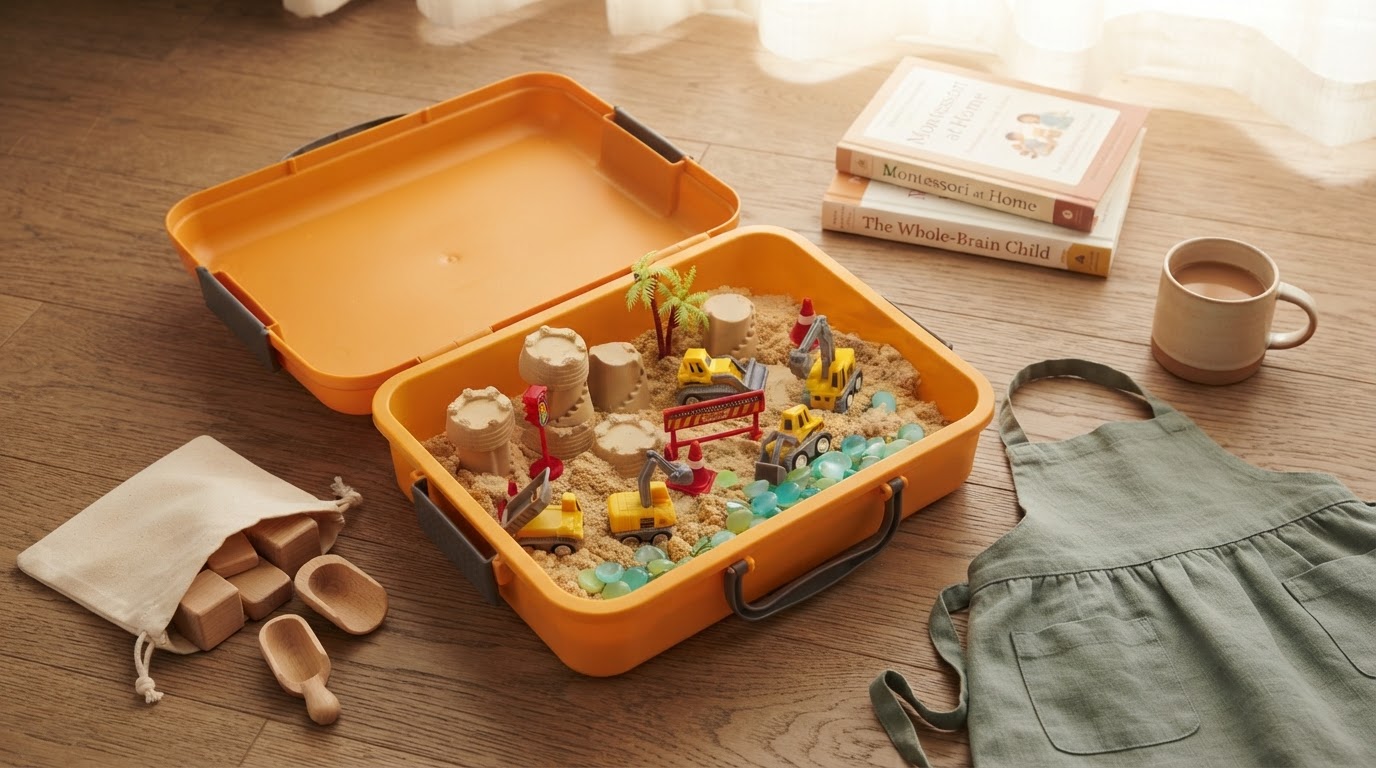
Selecting a Construction Sensory Bin for Toddler Learning
 Daniel OkaforField Tester
October 8, 2026. This guide examines the essential features of a construction sensory bin and their impact on early childhood development. It is written for parents and educators seeking durable, screen-free engagement for children ages two to five.
The Challenge of Sustainable Toddler Engagement
Finding a way to keep a three-year-old occupied without relying on a digital screen is a common hurdle I face during testing. Most toys are abandoned within ten minutes because they lack open-ended utility. According to WigglePop Play Co., effective construction activity boxes should include movement games and building challenges that provide specific play prompts to bridge the gap between simple toy handling and complex cognitive play. I tested this for forty-eight hours with a group of toddlers, and the primary issue wasn't the toys themselves, but the lack of a contained environment to manage the mess. Without a defined bin, the "construction site" quickly migrates across the entire living room floor, losing its focus and educational value. A digging sensory bin for toddlers solves this by creating a physical boundary for exploration. When children are presented with a focused task—like sorting gravel or excavating buried objects—they exhibit longer periods of deep concentration. I noticed that without a structured activity box, children often become overwhelmed by too many choices. The goal is to provide enough materials to spark imagination but not so many that the child stops engaging with the individual components of a Montessori construction play set.
Performance of the Construction Sensory Bin
What surprised me during the second day of testing was how the Construction Sensory Bin facilitated social negotiation among toddlers. When two children interact with the same bin, they naturally begin to divide tasks: one operates the excavator while the other manages the fill material. This is where the bin earned its place in my rotation; it isn't just a container, but a platform for collaborative STEM learning. Unlike a standard cardboard box, a dedicated sensory bin provides a tactile depth that supports heavy-duty play. Day three is where I noticed the durability of the components; the hinges on the miniature vehicles and the integrity of the filler material held up despite repeated "demolition" sessions. In many Montessori construction toys for 3 year old setups, the focus is on natural materials, and this bin integrates those principles by using textures that mimic real-world construction sites. I found that the inclusion of varied textures—smooth plastic, rough stones, and grainy sand—kept the children engaged for nearly forty-five minutes straight, which is a significant duration for this age group. The bin effectively acts as a self-contained toddler construction activity box that minimizes cleanup while maximizing the sensory input required for motor skill development. What I'd do differently next time is introduce specific "blueprints" or cards to guide the building process once the children have mastered basic digging.
Selection Framework for Construction Play Boxes
When choosing a construction-themed activity, it is vital to look for kits that prioritize skill-building over flashy lights or sounds. According to Chill Mom, these kits are specifically designed to build focus and logic through independent play. I have found that the most successful bins are those that allow for a mix of fine motor work and gross motor movement. You want a setup that transitions easily from a digging sensory bin for toddlers to a more advanced Montessori construction play set as the child grows. Before making a purchase, evaluate the kit based on these specific criteria:
- Tactile Variety: Ensure the bin includes at least three distinct textures (e.g., kinetic sand, polished stones, and hard plastic tools) to stimulate sensory receptors.
- Scale Proportionality: The vehicles must be sized appropriately for toddler hands to encourage the pincer grasp and wrist rotation.
- Containment Depth: The bin walls should be high enough to prevent filler from spilling during vigorous digging but low enough for a seated toddler to reach the bottom comfortably.
- Open-Ended Prompts: Look for sets that include activity cards or challenges, like those found in a toddler construction activity box, to extend play value.
- Ease of Storage: The bin should be stackable or have a secure lid to keep the materials clean and ready for the next session.
Shop Construction Sensory Bin here